They called it Operation Igloo.
The man who named it had an office.
He had never stood in a Cyprus August,
never watched the wire bleach white in the heat
like something almost holy.
Men who name things from a distance
rarely do.
The Germans built the fences —
POWs from the North Africa campaign,
handed tools, told where to dig.
Their camps sat adjacent to the Jewish ones.
They had more space.
They had more water.
The British saw nothing wrong with this.
Fifty-two thousand.
After Auschwitz, after the roads, after
the ships that tasted of rust and prayer —
barbed wire again.
British wire this time.
The same geometry.
A different flag.
On the twentieth of April, nineteen thirty-nine —
Hitler’s fiftieth birthday —
Neville Chamberlain spoke to the Cabinet Committee on Palestine.
The minutes survive. The Churchill papers hold them.
It is of immense importance from the point of view of strategy
to have the Muslim world with us.
If we must offend one side,
let us offend the Jews rather than the Arabs.
He jolly well did.
The offense meandered to Cyprus.
They sent for wire cutters.
Passed hand to hand through the dark.
Someone had timed the guards —
fifteen minutes between torch beams,
fifteen minutes to cut, replace,
vanish before the light swung back.
One man’s son still keeps those cutters
eight decades later.
Still sharp.
Still smelling of the night his father
decided not to wait.
They also dug a tunnel —
six months with spoons and stolen shovels,
carrying the earth out
in their clothing,
scattering it grain by grain
so no guard would notice the ground rising.
Seventy got through before the discovery.
Seventy who had survived everything
and could not, for one short season,
be counted.
In Tent Fourteen a woman hemorrhaged
after the birth.
The gates were locked. Curfew.
A guard waited for authorization.
The authorization came too late.
The baby lived.
They were not supposed to get this far.
MI6 planted mines on the hulls.
Operation Embarrass, they called it —
classified for sixty years.
One officer wrote later:
the Exodus could have been stopped
if the Foreign Office had permitted
the appropriate action.
Four thousand five hundred people.
The appropriate action.
Bevin sent the Exodus passengers back to Germany.
Hamburg.
British soldiers dragged them off the ships
onto German soil.
He thought it would be a deterrent.
He was right.
It deterred the world from believing
a word he said.
And yet —
they named their theatre after the British codename.
The Igloo Follies,
performed in a hundred and ten degrees
for anyone in the camp who would come.
Which was everyone.
Somewhere in the dust a string quartet
rehearsed Schubert.
The photograph still exists:
four chairs, four musicians,
a tent behind them,
barbed wire beyond that.
Each week they published a newspaper —
Al Hasaf: On the Threshold.
No proper paper.
Cardboard. Anything with a blank side.
Professional artists crossed the water from Palestine
to teach painting inside the wire.
Their students worked in limestone,
carving maps of their imprisonment into stone:
the camps, the coast,
the forty miles they were not allowed to cross.
They taught Hebrew in canvas classrooms.
They married in the August heat.
They sang HaTikvah at the fence line
until the guards gave up trying to stop them.
Two thousand two hundred babies
born behind the wire.
Each one a refusal.
A Turkish Cypriot named Rizi
was sent by the British to find the tunnels.
He helped dig them instead.
Ten shillings a person.
“You never kill a bird,” he said,
“that lays a golden egg.”
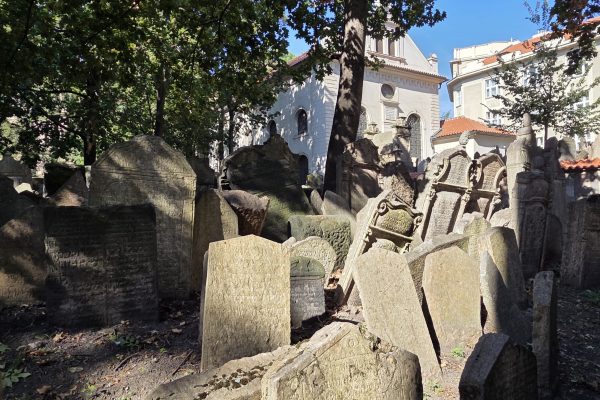
Four hundred are buried at Margo Cemetery.
Some stones marked, some not.
They survived everything
and died forty miles from Palestine
waiting for their quota number to come up.
I did not know this story.
I had to go looking.
It was under the classified files,
under sixty years of official silence,
under the version Britain tells itself —
Bergen-Belsen’s liberation,
the good war, the clean hands.
Men who name things from a distance
rarely come close enough to see.
The wire cutters are in a drawer somewhere.
The limestone maps are in the museums.
The last one out locked the gate behind him —
we have the photograph.
The names at Margo Cemetery
that have no stones
are still waiting.
I have come close enough.
I am writing them down.
For more information on this operation: